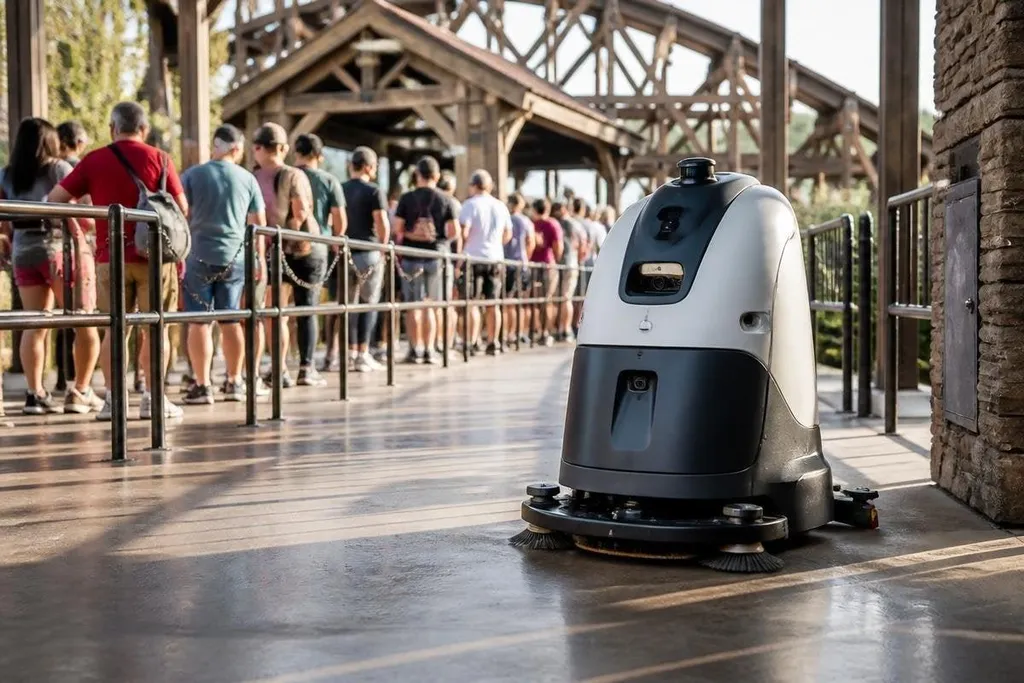
A theme park robot can move millions of visitors through a ride area, perform the same motion all day, or make a character look alive.
But no evidence pack is available for this topic, so naming specific machines, prices, dates, or deployments would risk turning guesses into reporting.
This is the standard a useful list of theme park robotics advances should meet. It gives you a way to separate a working system from a short video made for attention.
- A named site: The park, attraction, or test location is public.
- A measured task: The report gives a speed, cycle time, uptime figure, load, or number of performances.
- A clear role: You can see what the robot does and where people fit into the process.
What would count as a real advance?
A new robot earns that label through a change that matters to a park operator or visitor. Repeating a movement with more force may matter for a show prop. Moving safely around guests may matter more for a service robot. The claim needs to match the job.
The useful detail is the old method and the new one. If a robot replaces a fixed mechanism, the report should say what changed. If it works beside guests, the report should explain its sensors, speed limits, stopping system, and human control.
A polished video proves that a robot completed one recorded task. It doesn't prove a full day of work, safe recovery from a fault, or low maintenance needs. Those gaps matter in a park, where equipment runs on a schedule and visitors may stand close to moving parts.
The evidence behind the claim
A strong report should name its source and show the working details. A park announcement may confirm that a machine entered service, while a technical paper or safety filing may explain how it behaves. Those sources answer different questions.
That split matters when a theme park robot moves from a private demo to guests in a public show. Theme park robotics reporting from Robot24.com can give you a dated record of the machine, park, test, and public run, so the claim rests on more than a maker’s announcement.
Look for the date of the demonstration, the number of units, and the length of the operating period. A report that gives only words such as “advanced” or “lifelike” leaves out the facts needed to judge the system.
Where theme park robots can fail
The setting adds limits that a lab video may hide. Visitors can stop without warning, children can reach into spaces adults avoid, and outdoor attractions face rain, dust, heat, and repeated impacts from daily use.
A robot can also fail in less visible ways. A performer may need a technician after every show. A ride system may stop when one sensor reports a fault. A character robot may look natural from the front while its cables, joints, or control hardware remain exposed from the side.
I’d reject any “biggest advance” list that ranks machines without showing how they performed after the launch event.
A practical check before you trust the headline
Use these checks when you read a claim about theme park robotics:
- Find the operator. Confirm the park or attraction named in the report.
- Check the date. Separate a current installation from an old concept video.
- Read the task. Note the exact movement, service job, or ride function shown.
- Look for limits. Check operating hours, weather rules, safety stops, and human control.
- Ask what is missing. Mark any claim without a price, unit count, test period, or source.
That process won't produce a ranking without verified material, and it shouldn't. The next credible list of theme park robotics advances will need named machines, operating sites, measured results, and clear limits before any headline earns the word.